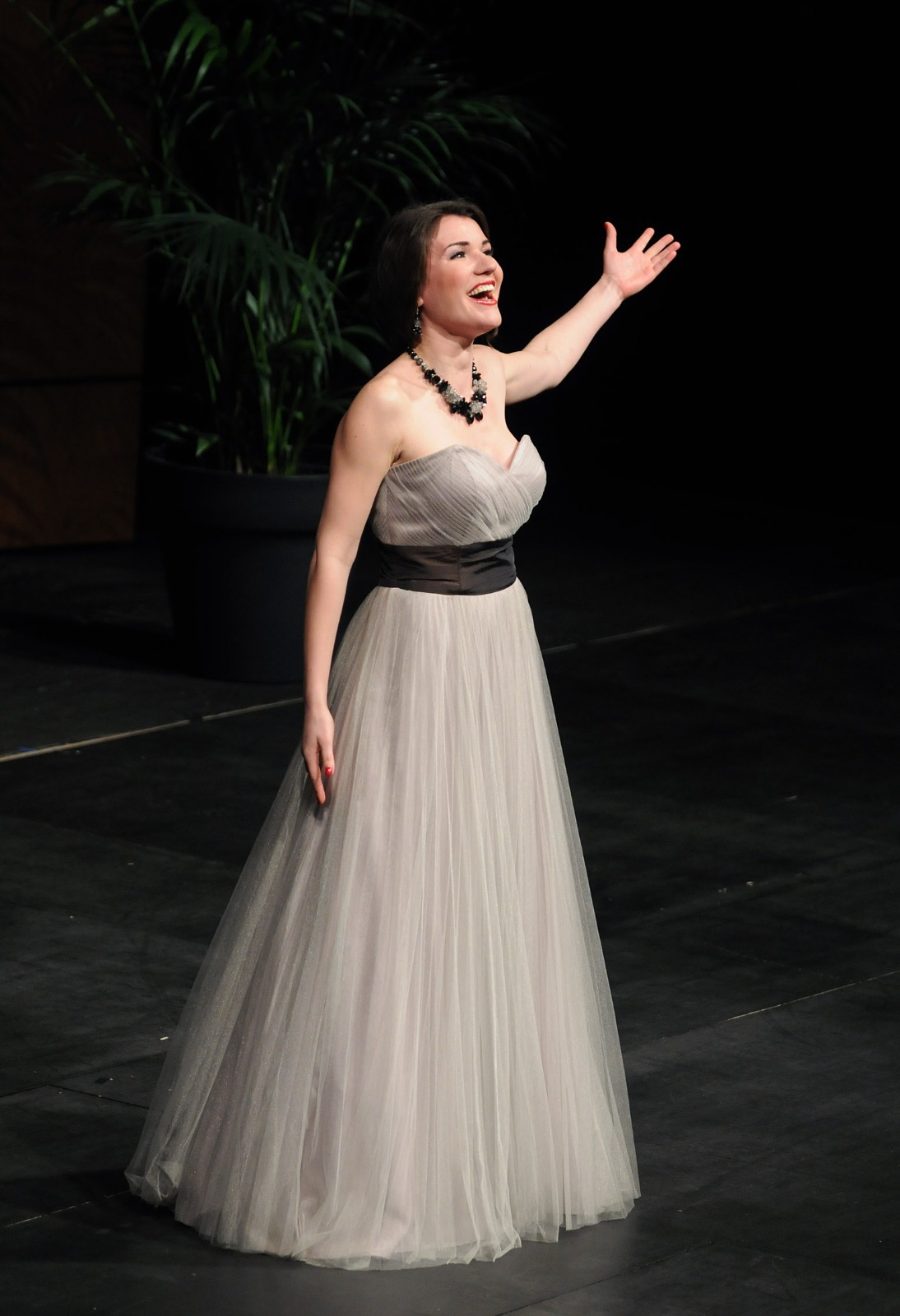
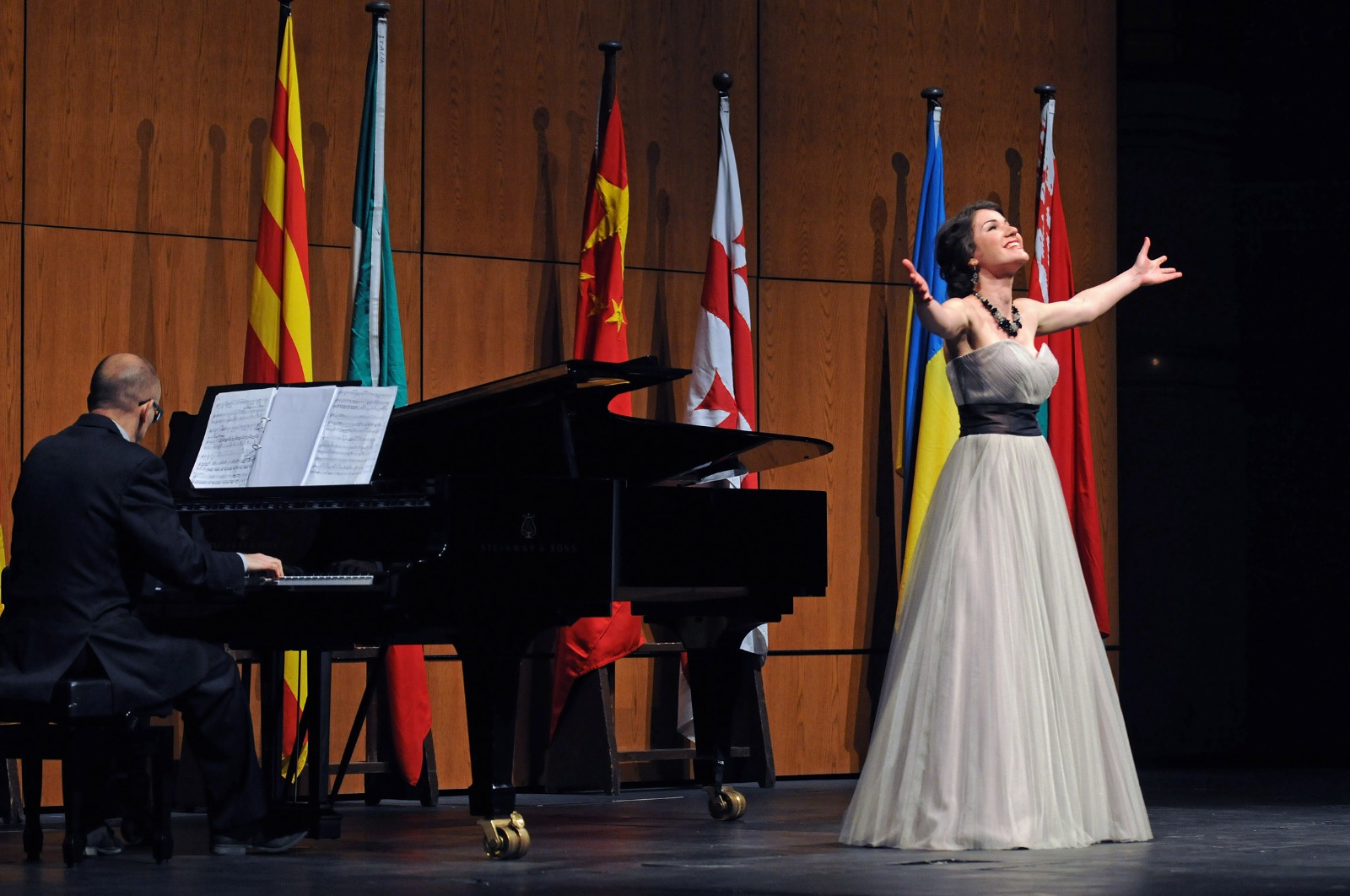
Interviews with the winners of the Tenor Viñas Contest 2015: la soprano Olga Kulchynska
INTRODUCTION TENOR
How are you? How do you feel? What are you currently working on?
Everything's good, thank you very much. I’m doing well, and right now I’m working at the Royal Opera House in London, where I’m performing in La Bohème. We already did five performances in December, and we have five more in January.
How did your passion for music begin? When did you know you wanted to become an opera singer?
My parents are classical musicians—my mother is a cellist and my father is a pianist. I grew up in a very musical environment, in a very small provincial town in Ukraine, where we basically only had a chamber orchestra—no symphony orchestra—but I listened to many recordings during my childhood. So yes, music has always been with me. I really don’t know what life is like without classical music.
I probably knew I would be a musician when I was five years old. A musician—no matter what kind—but I started thinking about becoming an opera singer when I was around thirteen.
How has your musical career and trajectory been? Do you think it has been difficult, or just like any other profession?
I studied at the conservatory in Kyiv and later joined the Young Artist Program at the Bolshoi Theatre in Moscow. My career started there—the Bolshoi was my first major stage, and basically all my experience began there.
For me, it's hard to answer that question because I believe this profession has a difficult path, just like any other. It probably requires a bit more self-discipline, physical and mental work. It’s not just about working on your voice—you have to work on every aspect of your life. You can’t develop only your voice; you have to work on your intellectual side, develop acting skills, and stay physically fit to be able to move on stage. It’s a very complex profession.
TENOR VIÑAS CONTEST
How did you decide to take part in the Tenor Viñas Competition? Where were you working or performing before entering?
I remember it was my second year at the Bolshoi Theatre. I was in the Ensemble and I was 24 years old, so I was quite a young singer. I remember I had always been curious about participating in the competition. So I applied and decided to give it a try—why not?
I remember singing repertoire I was working on at the theatre—I think I was preparing the role of Susanna at the Bolshoi, and while I was working on that role, I was also preparing for the Tenor Viñas Competition. I was working on it with my teachers from the Young Artist Program—even though I was in the Ensemble, I could still take classes through the Young Artist Program and prepare with them. So, in addition to my work at the theatre, I was also getting ready to take part in the competition.
What was your experience like?
I remember the competition was fantastic. It was my first time in Barcelona. I didn’t really know anyone who was participating, but during the competition I met amazing singers, many of whom I’m still in touch with. One of the girls I met now lives here in England, and I also met many other singers who are now working on international stages—I met them all there. It’s fantastic. Competitions are a great opportunity to meet new people and exchange experiences. I’m really glad I went.
What is your most emotional memory from the competition?
The most emotional memory is probably the day of the Final. When the judges started announcing the winners—there were many different prizes like fourth prize, fifth prize, and so on—I was sitting there not knowing what to expect. I really didn’t expect anything; I was already happy just to have made it to the Final. My goal in participating in competitions was the experience I would gain. I wasn’t expecting to win anything or receive any prize. It was a great experience, an opportunity to show what I could do, so just making it to the Final already made me happy.
When they announced the second prize, I thought: “Okay, okay, you probably won’t get anything,” and then they announced me as the first prize winner—it was a shock because I really didn’t expect it. There were so many great singers. I truly appreciated it. I was very happy that people liked the way I sang.
AFTER THE COMPETITION
What impact did the Tenor Viñas Competition have on your career? Do you think it opened doors and offered you unique opportunities to work with renowned conductors or perform in major operas?
This competition really had a big impact on my career because after winning, I remember the Gran Teatre del Liceu offered me the role of Musetta in 2016, which was my debut at the Liceu. Even before that debut, thanks to winning the first prize, I was able to make my debut at the Zurich Opera. I was hired on very short notice—just one month before rehearsals started in Zurich. It was a new production of I Capuleti e i Montecchi directed by Christoph Loy and starring Joyce DiDonato. And it all happened thanks to the competition, because no one knew about me before I won it. I was very grateful to the Zurich Opera for inviting me so quickly and trusting me. So yes, it really had a huge influence on my career. After Zurich, I started receiving offers from many other opera houses in Europe.
What advice would you give to the participants of the next edition, and what do you wish you had known when you took part in it?
The advice is always the same: be brave. You have to take risks.
I know it’s very hard, especially for young singers, but the most important thing is to be yourself—to truly show who you are, what your talent is, how you like to sing, how you feel about music. It’s really about you. When young singers get on stage, I think all of us as an audience want to see something personal, something truly different from the other people singing on stage. So it’s really about knowing who you are and what you want to say and express through the music you perform. And the rest is about being brave.
Don’t compare yourself to others. Just sing. Put the music first—that always helped me. That’s how I worked through anxiety before going on stage. We all get nervous, some more than others, but we all have that feeling before performing. So how did I manage that? By just listening to the music and thinking about it. That’s all. It really helps a lot.
As for myself—well, I don’t know—I think the memories I have from the competition are really good ones. I remember I wasn’t too worried, because again, I wasn’t expecting to win. I went there because I wanted to take part in the competition, I wanted to hear other singers, and it was a great opportunity to sing in front of people who run opera houses around the world. So I really didn’t expect to win, just like with other competitions I took part in. I went for the experience first, so I don’t think I would advise anything different to myself back in 2015. I think I was doing fine—at least at that moment in time.
END
How do you think the music world has changed since you started your career?
To be honest, I don’t feel a huge difference in the opera world’s development between 2015 and now. I’ve only been in this business for about 10 years—it’s not that long. There are people who’ve been in it for 30 or 40 years. For them, the difference is probably much more evident—what they had back then versus what we have now. What probably changed the opera world the most was the pandemic; theatres shifted a bit—their budget strategies, planning, etc. But overall, I don’t feel such a big difference between 2015 and now.
What do you feel when you sing?
It depends on the repertoire I’m singing—I try to feel what the character feels. I try to put myself in the mood and mindset of my character, so it’s always different.
For me, the music always comes first. That’s what I’m trying to do, and I’m still learning how to do it—not to show myself through the music, but to show the music through myself. I think that’s what it’s about—the music and the character through my instrument, through my body. That’s the most important thing for me. I’m a huge fan of classical music, so I always try to focus on that. That’s all.